Cosmetic Dentistry 101: Popular Treatments Explained

A healthy smile and an attractive smile are not always the same thing. Many people have teeth that function well enough for chewing and speaking, yet still feel self-conscious about chips, stains, gaps, uneven edges, or old dental work that shows when they laugh. That is where Cosmetic Dentistry comes in. It sits at the intersection of oral health, facial aesthetics, and patient confidence, and it is far more nuanced than the before-and-after photos suggest.
The most important thing to understand from the start is that cosmetic treatment is rarely just about making teeth whiter or straighter. Done well, it respects bite function, gum health, tooth structure, age, face shape, and even personality. A smile that looks natural on one person can look overly bright or oddly shaped on another. The best cosmetic work tends to be the least obvious. People notice that someone looks refreshed or polished, not that they had extensive dental treatment.
If you have ever wondered what dentists actually mean when they talk about bonding, veneers, whitening, contouring, or clear aligners, this guide breaks down the most common treatments, how they work, who tends to benefit, and where the trade-offs lie.
What Cosmetic Dentistry really covers
Cosmetic Dentistry is a broad term, not a single procedure. It generally includes treatments that improve the appearance of teeth and gums, especially color, shape, size, alignment, spacing, and overall smile balance. Some procedures are almost entirely aesthetic, such as whitening. Others serve both cosmetic and restorative goals, such as crowns, implants, or orthodontics.
That overlap matters. A patient may come in asking for whiter teeth and leave with a treatment plan that begins with replacing a leaking filling or treating gum inflammation first. Cosmetic work placed on an unstable foundation rarely ages well. In practice, experienced dentists tend to think in layers. First, is the mouth healthy? Second, is the bite stable? Third, what aesthetic changes will produce the best result with the least sacrifice of natural tooth structure?
That last point deserves emphasis. Good cosmetic dentistry is not about doing the biggest procedure available. In many cases, the smartest option is the most conservative one.
Teeth whitening, the simplest place to start
For many adults, whitening is the lowest-commitment way to improve a smile. It can lift years of staining from coffee, tea, red wine, tobacco, and normal aging. Teeth naturally darken over time as enamel thins and the underlying dentin shows through more strongly, so even people with excellent hygiene often notice a gradual shift toward a yellower or duller shade.
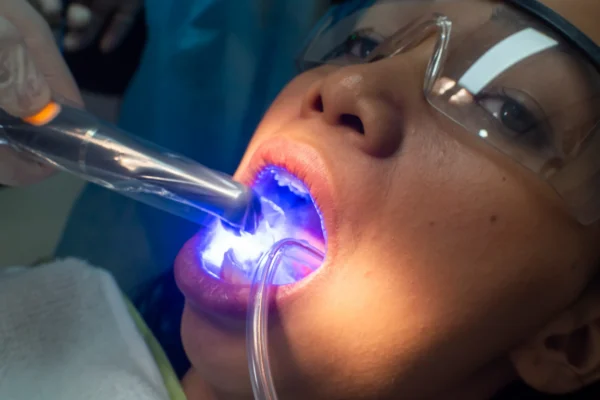
There are two main routes: professional in-office whitening and take-home systems provided by a dentist. In-office whitening is faster. It can produce a visible change in a single visit, though the exact degree varies. Some patients see a dramatic improvement, while others get a more modest brightening because of enamel thickness, stain type, or existing restorations. Take-home trays tend to work more gradually over several days or weeks, but they offer a high level of control and often suit people with sensitive teeth better.
The limitation that surprises people most is this: whitening does not change the color of crowns, veneers, or tooth-colored fillings. If a patient has an old front filling that already stands out slightly, whitening the surrounding teeth may make that mismatch more obvious. In those situations, dentists often sequence treatment carefully, whitening first and then replacing visible restorations to match the new shade.
Sensitivity is the most common side effect. For some people it is mild and brief. For others it can be sharp enough to interrupt treatment for a few days. That does not necessarily mean whitening is off the table, but it may call for lower-concentration products, shorter wear times, fluoride or desensitizing agents, or a slower approach.
Dental bonding, quick changes with conservative treatment
Bonding is one of the most versatile procedures in cosmetic practice. It uses tooth-colored composite resin, the same general family of material used for many white fillings, to reshape part of a tooth. Dentists use bonding to repair chips, close small gaps, improve symmetry, lengthen worn edges, and mask certain discolorations.
When done well, bonding can be elegant work. A skilled dentist layers shades and translucencies to mimic the way natural enamel catches light. It can often be completed in a single appointment with little to no drilling, which makes it especially appealing for younger patients or anyone wanting a reversible or conservative option.
The trade-off is durability. Bonding is not weak, but it is more prone to staining, chipping, and wear than porcelain. Someone who bites pens, chews ice, grinds their teeth, or has a heavy bite on the front teeth may break bonded edges sooner than expected. Small touch-ups are common over time. That does not make bonding a poor choice. It simply means the maintenance profile is different from ceramic work.
I have seen bonding serve beautifully in situations where a patient only needed a subtle adjustment, such as evening out one lateral incisor or softening a small chip after an accident. Those are often the cases where a full veneer would feel excessive. On the other hand, when several front teeth are mismatched in color, shape, and position, trying to solve everything with large composite additions can become a maintenance burden. That is where veneers may start to make more sense.
Veneers, highly effective and often misunderstood
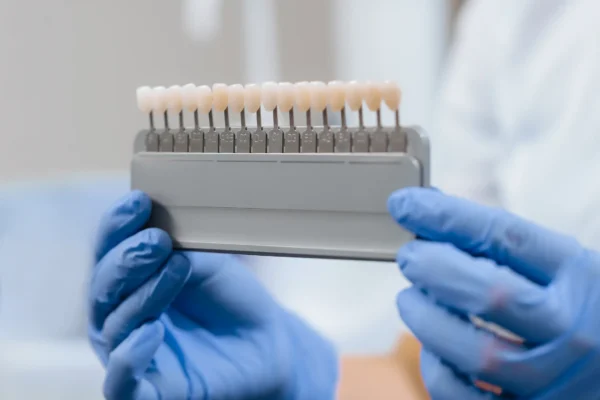
Porcelain veneers are thin shells bonded to the front surfaces of teeth, usually in the smile zone. They can change color, shape, length, width, and overall smile harmony with remarkable precision. For the right patient, they are Cosmetic Dentistry one of the most transformative tools in Cosmetic Dentistry.
Veneers are often chosen when there are multiple concerns at once: stubborn discoloration that will not whiten predictably, uneven tooth shapes, worn or chipped edges, mild crowding, small gaps, or front teeth that look out of proportion. Porcelain has a stable, enamel-like luster and resists staining better than composite resin, which is one reason veneer cases can look so polished for years.
But veneers are not a casual decision. Even conservative veneer preparations usually involve some removal of enamel. Once teeth are prepared, the process is not truly reversible in the practical sense. That is why careful planning matters. Good dentists often use photographs, mock-ups, or temporary trial smiles so patients can preview shape and length before Cosmetic Dentistry final porcelain is made.
The phrase “Turkey teeth” has entered public conversation for a reason. Some heavily marketed smile makeovers involve aggressive tooth reduction and crowns placed on healthy teeth when less invasive options might have worked. That is not what quality veneer treatment should look like. The best veneer cases preserve as much natural structure as possible, respect the patient’s bite, and aim for proportion rather than uniformity. Real teeth are not all identical rectangles, and a smile made too white or too symmetrical can look flat and artificial.
Veneers also require judgment about lifestyle. A patient with severe grinding, nail biting, or edge-to-edge bite pressure may need bite management and a night guard if veneers are going to last. Without that, even beautifully made porcelain can chip or debond.
Crowns, when aesthetics and strength need to work together
Crowns are often discussed as restorative treatment, and rightly so, but they also play a major cosmetic role. A crown covers the entire visible portion of a tooth and is usually recommended when a tooth is too damaged, heavily filled, root canal treated, cracked, or structurally compromised for a veneer or bonding to be reliable.
From a cosmetic standpoint, modern ceramic crowns can look excellent, particularly on front teeth where color, translucency, and contour are carefully managed. The advantage of a crown is that it can rebuild a tooth that is not only unattractive but genuinely weakened. The disadvantage is that it generally requires more tooth reduction than a veneer.
In real practice, the decision between a veneer and a crown is often less about what looks better and more about what the tooth can support safely. If half the tooth is already restoration, if there is a large fracture, or if old decay has undermined the structure, a veneer may be too conservative to last. In that situation, a crown can be the more responsible option.
Clear aligners and braces, straightening as cosmetic treatment
Many adults seek Cosmetic Dentistry because their teeth have shifted over time. Lower front crowding is especially common with age. Teeth that were once straight can overlap slightly, making hygiene harder and the smile less even. Orthodontic treatment, whether through clear aligners or braces, addresses the position of teeth rather than simply masking it.
Clear aligners have changed the conversation because they are discreet and generally easier for adults to fit into daily life. They can work very well for mild to moderate crowding, spacing, and certain bite corrections. Success, however, depends heavily on compliance. If aligners are not worn the recommended number of hours per day, progress slows or stalls.
Braces still have an important place, especially in more complex tooth movements or bite issues. They may not carry the same cosmetic appeal during treatment, but they are often more efficient in difficult cases.
One common mistake is assuming veneers are a substitute for orthodontics in every situation. Veneers can create the illusion of straighter teeth, but they do not actually move roots or correct bite relationships. If a patient has significant crowding, rotated teeth, or functional bite issues, straightening first often produces a more stable and conservative result. Sometimes the most elegant cosmetic case is orthodontics followed by whitening and a small amount of bonding, rather than a full set of veneers.
Gum contouring and the frame around the teeth
A smile is not just teeth. Gum levels, lip line, and the amount of tooth display all influence how balanced a smile looks. Some people have what is often called a gummy smile, where excess gum tissue makes the teeth appear short. Others have uneven gum margins that make one tooth look larger or smaller than its neighbor.
Gum contouring reshapes the gum line to improve symmetry or reveal more tooth structure. In some cases it is a simple soft tissue procedure. In others, especially when the underlying bone level is involved, more detailed planning is needed. A proper assessment matters because removing gum tissue without respecting biologic width can create chronic irritation or rebound.
This is one of those treatments that can seem minor but make an outsized difference. A central incisor that appears square and stubby may not need a veneer at all if the real problem is excess gum coverage. Once the gum line is adjusted, the tooth may suddenly look proportionate.
Dental implants, replacing missing teeth with aesthetics in mind
When a tooth is missing, appearance and function both suffer. Dental implants are often the most natural-looking and stable replacement option because they support a crown without relying on neighboring teeth. In the front of the mouth, however, implant aesthetics can be technically demanding.
The final result depends on more than placing a titanium post in bone. Implant position, gum thickness, bone volume, papilla shape, and the emergence profile of the final crown all affect whether the replacement blends with adjacent teeth. Front tooth implants can look stunning, but they are less forgiving than many people realize. Tiny differences in angle or gum contour can be noticeable.
That is why cosmetic planning matters from the beginning. Sometimes preserving or rebuilding bone and soft tissue is the key step. Sometimes a temporary restoration is used strategically to shape the gum before the final crown is made. The patients happiest with their results are often the ones who understood from the start that excellent implant aesthetics take time and coordination.
Enamel shaping and micro-adjustments
Not every cosmetic concern calls for a major procedure. Enameloplasty, also known as tooth contouring or reshaping, involves polishing or removing a tiny amount of enamel to smooth rough edges, reduce minor overlaps, or improve symmetry. It can be especially useful when one tooth has a small point or irregularity that catches the eye.
This type of treatment works best in restraint. The amount of enamel that can be safely adjusted is limited, and not every tooth shape problem can be solved by polishing alone. Still, in carefully selected cases, a few subtle refinements can improve a smile more than patients expect. It is often paired with whitening or bonding for a conservative refresh.
How dentists decide which treatment fits
Patients often arrive thinking they want a specific procedure because they saw a celebrity smile or a social media transformation. The real decision process is more individualized. Dentists evaluate a combination of factors, including tooth color, existing restorations, gum health, bite forces, enamel thickness, habits, and long-term maintenance.
A sensible treatment recommendation usually tries to answer five questions:
- What bothers the patient most when they smile?
- What can be improved conservatively?
- What will hold up under this person’s bite and habits?
- How much upkeep is realistic?
- Will the result still look natural ten years from now?
That final question separates trend-driven dentistry from sound clinical judgment. Ultra-white, perfectly uniform teeth may photograph dramatically, but they can look harsh in everyday life, especially as a face ages. Most attractive smiles have variation, texture, and proportions that fit the individual.
Cost, maintenance, and the reality after the reveal
Cosmetic Dentistry can range from relatively affordable to a major financial investment. Whitening and small bonding cases usually sit on the lower end. Veneers, crowns, orthodontics, and implants cost more because they involve lab work, multiple appointments, advanced planning, or surgery. Fees vary widely by region, dentist experience, material choice, and case complexity.
What matters just as much as the initial fee is the maintenance plan. Cosmetic work is not a one-time event that can be forgotten indefinitely. Bonding may need polishing or repair. Whitening may need occasional touch-ups. Retainers are essential after orthodontics unless a patient wants teeth to drift again. Veneers and crowns can last many years, but they are not permanent in the sense of never needing replacement.
Patients are often relieved to hear this discussed plainly. A beautiful result is worth protecting, and that usually means regular hygiene visits, sensible habits, and in many cases a night guard for people who clench or grind.
Questions worth asking before you commit
Before starting treatment, it helps to have a candid conversation with the dentist. Ask to see similar cases, especially ones that resemble your teeth rather than idealized examples. Ask what part of the plan is cosmetic, what part is protective or restorative, and what alternatives exist at lower cost or with less tooth alteration. Ask how the work will age, what could go wrong, and what maintenance is expected.
A thoughtful cosmetic consultation should not feel like a sales pitch. It should feel like collaborative planning. The best dentists tend to be transparent about limits. They will tell you when whitening may not be enough, when bonding may stain, when orthodontics should come before veneers, and when your expectations need adjustment.
A natural result is usually the best result
The strongest cosmetic cases are not always the most dramatic. Sometimes they involve six veneers and a major transformation. Sometimes they involve aligners, whitening, and two tiny areas of bonding. Sometimes the right answer is simply replacing old visible fillings and refining one uneven edge.
Cosmetic Dentistry works best when it solves the problem the patient actually sees while preserving as much healthy tooth structure as possible. It is part science, part engineering, and part visual art. The technical side matters enormously, but so does restraint. Teeth have to function every day under pressure, moisture, temperature changes, and years of use. A smile that looks good in a mirror but fails under normal habits is not a successful result.
For anyone considering treatment, the smartest first step is a thorough evaluation with a dentist who values both aesthetics and long-term oral health. A good cosmetic plan should improve your smile, yes, but it should also make sense for your teeth, your bite, your budget, and the way you live. That is what turns cosmetic treatment from a quick fix into something genuinely worthwhile.
Toothworks of Bakersfield, Dentist and Orthodontist
1030 H St #1, Bakersfield, CA 93304, United States
+1 661-323-9421
FAQ About Cosmetic Dentistry
Is bonding better than veneers?
Neither option is best for everyone. Composite bonding can address small chips, gaps, or shape concerns and is generally easier to repair. Porcelain veneers may offer greater resistance to staining and wear, but often require removal of some enamel. A dentist should assess your oral health, bite, goals, and budget before recommending treatment.
How long will dental bonding last?
Bonding commonly lasts about three to ten years before it needs repair or replacement, though this varies with the location and amount of bonding, your bite, and daily habits. Regular dental visits, good oral hygiene, and avoiding chewing hard objects can help protect it. Ask your dentist what lifespan is realistic for your particular treatment.
What are the risks of teeth whitening?
Whitening can cause temporary tooth sensitivity and gum irritation. Overuse or incorrect use may damage teeth or gums, and whitening does not change the color of existing crowns, veneers, or fillings. Have a dentist assess your teeth and gums, and follow the recommended product directions and treatment schedule.